
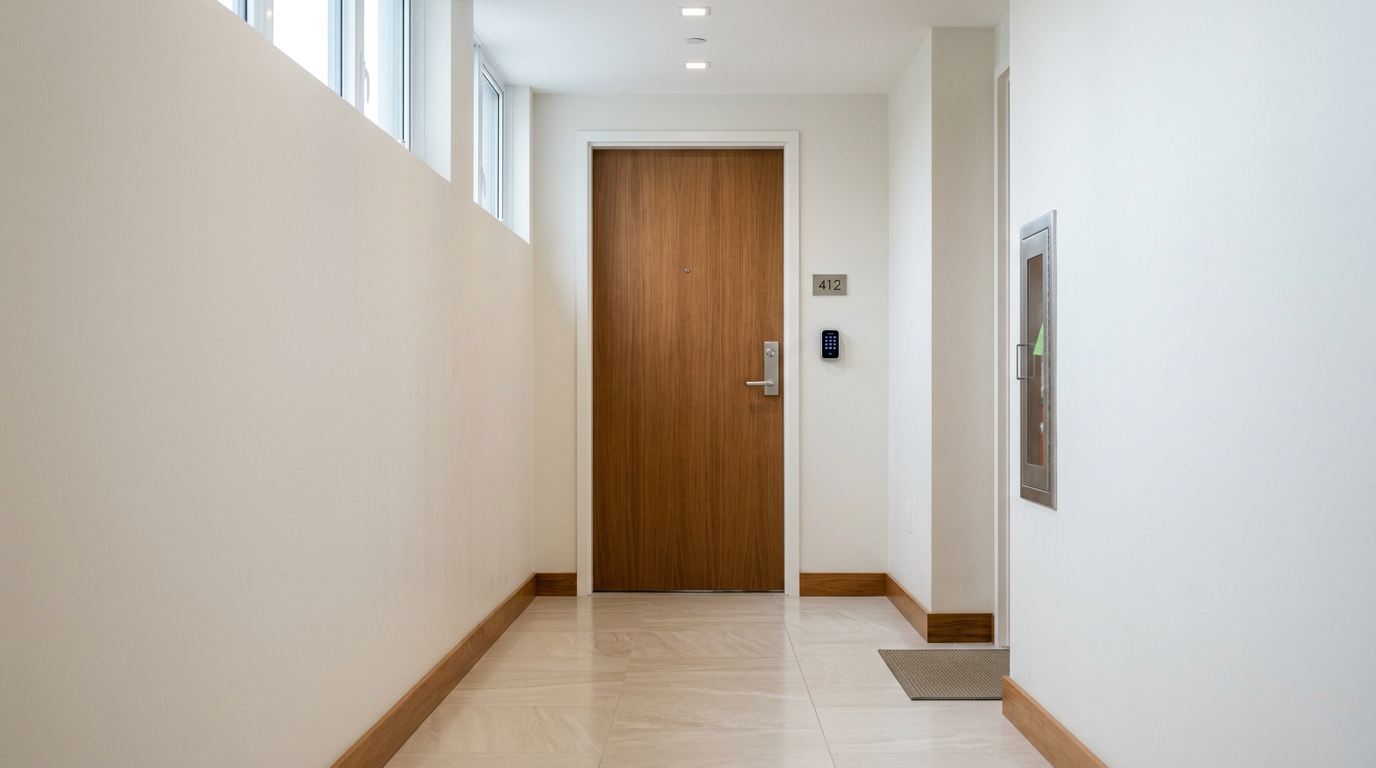
The No-Key Problem: Access Logistics That Slow Tours in Stabilized Communities
In a stabilized community, the hard part of a tour is rarely the unit. It is getting a prospect and a key into the same place at the same time.
In stabilized apartment and build-to-rent communities, tours can stall on access: a key that has to be handed over, a lockbox code that outlives the tour, or a leasing office that has to be staffed. Vendor sources say lockboxes leave physical keys that can be copied and codes that can be reused, and that smart locks issue time-bound credentials after ID verification. None of the three guides we read gives a sourced statistic on lost keys or no-shows, so the case here is logistical, not numerical. Self-guided access with ID-verified entry, in the hours the operator sets, removes the handoff.
A stabilized community has the opposite problem of a lease-up. The units are finished, the leasing office is open, and the prospects exist. What slows a tour is the handoff: someone has to be there with the key, or the key has to be somewhere the prospect can reach, or the unit has to be opened by a person whose afternoon is already full.
Where the handoff breaks
We read three public guides that cover tour access, each from a software vendor. That matters: the claims below are vendor claims, and none of the pages gave a sourced statistic for lost keys or for no-shows. We list them because they describe the same logistics most operators know first-hand.
Gatewise’s guide (February 2026), from a smart-access vendor, says lockboxes leave physical keys that can be copied during a tour and codes that can be reused after the window closes. It also cites RemoteLock, another vendor, for the figure that as many as 30–40% of U.S. apartment buildings still rely mainly on physical keys. We could not trace that figure to an independent study. Buildium’s 2019 guide, from a RealPage company, describes the lockbox arrangement and notes the risk of damage or lost keys.
What each access method costs a tour
| Method | What it takes | Where it slows |
|---|---|---|
| Staffed with a key | A team member at the unit, on time | Staff calendars; late starts; tours that wait for a person |
| Lockbox | A box, a code, and a rule for key return | Copied keys, reused codes, lost keys, lockbox fees |
| Time-bound digital access | A credential per booking, issued after ID verification | Setup and policy; the prospect must verify before arriving |
Summary of vendor guidance from Gatewise (2026) and Buildium (2019). Not a measured comparison. Each community’s results depend on its setup and policies.
“A tour should start when the prospect arrives, not when someone finds the key.”
The exact-unit problem
Access logistics also decide which unit a prospect sees. When showing requires a person with a key, communities often default to a model or a convenient vacant. A prospect who can enter the exact unit they might lease, on their own, sees what they would actually live in. That is the same “exact-unit” argument made in our model-unit post, now seen from the door.
What access needs to include
From the vendor guides and common sense, a short list holds up. A credential tied to a booking, valid only for the booked window. ID verification before the credential is issued, so the community knows who is entering. Entry logging and a notification so staff see arrivals. A way to end access if a prospect does not show. Several vendor pages describe these features; they are practical requirements, not guarantees of any outcome.
With Tourzy®, prospects book a window, verify their ID, and tour the unit on their own in the hours the operator sets. Tourzy®’s AI assistant answers questions on the tour, and your team can step in through the app when you want them to. Prospects tour privately from other prospects and agents during their window, with ID-verified entry. Customers order hardware through Tourzy® and install it themselves, so confirm what your doors need before you plan a rollout.
How to size your own problem
You do not need an outside study. For the last 30 days, count: tours scheduled, tours that started within ten minutes of the booking, and tours that required a staff member to hand over a key. Add the minutes between booked time and actual start. That gap, across your properties, is the cost of your current access method.
We do not claim that changing access raises lease-ups by any amount. The case is simpler: fewer steps between a booking and an open door means fewer places for a prospect to give up, and fewer afternoons spent at a unit waiting.
Frequently asked questions
What is the main access problem with apartment tours?
Getting a prospect and a key to the same unit at the same time. Staffed tours depend on a person being there, and lockboxes depend on codes and keys that can be copied or lost.
Are lockboxes safe for self-guided apartment tours?
Vendor guides say lockboxes can leave copied keys and reusable codes. They say time-bound credentials after ID verification are safer, but those are vendor claims with no sourced statistic.
How many apartment buildings still use physical keys?
Gatewise cites RemoteLock, another vendor, for as many as 30–40%. We could not trace the figure to an independent study, so treat it as directional.
Does Tourzy® require a leasing agent on site?
No. Prospects tour on their own with ID-verified entry in the hours the operator sets, and your team can step in through the app when you want them to.
Sources: Gatewise, “Why Self-Guided Tours Require Smart Unit Locks” (gatewise.com/blog, February 23, 2026), a smart-access vendor; Buildium, “The low-down on self-showings” (buildium.com/blog, February 6, 2019, Amanda Maher), a RealPage company promoting its own showing tool. The 30–40% physical-key figure is cited by Gatewise from RemoteLock, also a vendor, and was not independently verified. Neither page provides a sourced statistic on lost keys or no-shows.
Take the handoff out of the tour.
See how Tourzy® gives prospects ID-verified self-guided access to the exact unit, in the hours you set, with AI answers on every tour and your team a tap away.
Book a demo